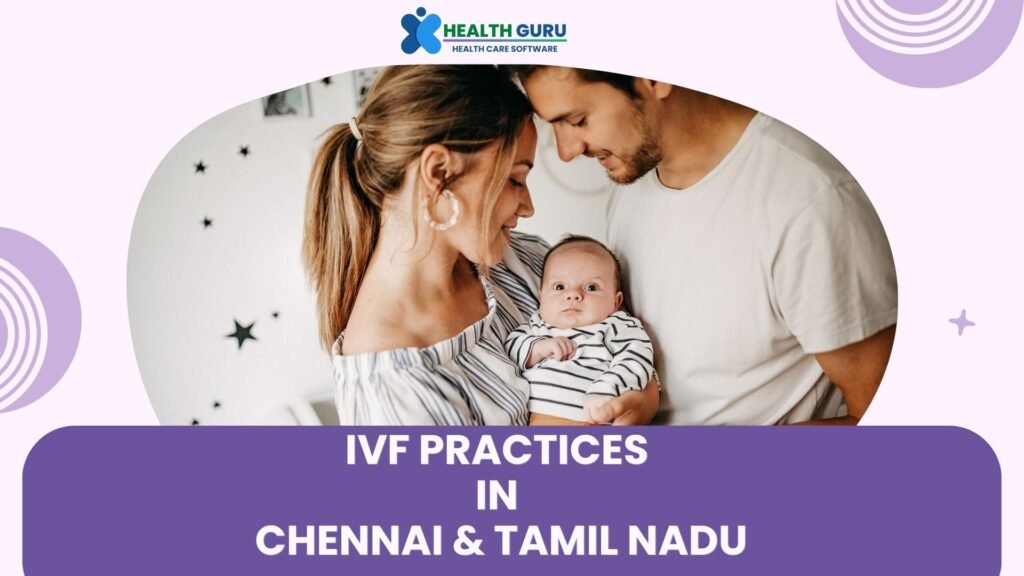
The Frontier of Reproductive Medicine: Unpacking the IVF Ecosystem in Tamil Nadu and Chennai
The global landscape of Assisted Reproductive Technology (ART) is undergoing a rapid evolution, driven by pioneering clinical methodologies, stringent ethical governance, and a surging demand for accessible fertility solutions. At the epicenter of this transformation in South Asia sits Tamil Nadu, with its capital city, Chennai, serving as the definitive benchmark for reproductive healthcare excellence.
For patients navigating the emotional and physical complexities of infertility, Chennai represents a sanctuary of hope. For clinicians, embryologists, investors, and medical tourism facilitators, the region represents one of the most mature, high-growth, and technologically advanced fertility markets in the world.
What is IVF and How Does It Work?
What is IVF?
IVF is a foundational category of Assisted Reproductive Technology (ART) where an egg is fertilized by sperm outside the human body, in a highly controlled laboratory environment. The term “in vitro” literally translates from Latin to “in glass,” referencing the laboratory Petri dishes or test tubes where fertilization historically took place.
The Step-by-Step Clinical Process
A standard IVF cycle is a meticulous multi-week medical process broken down into five core phases:
- Ovarian Stimulation: The patient receives hormonal medications for 8 to 12 days to stimulate the ovaries to produce multiple mature eggs, rather than the single egg normally developed in a natural monthly cycle.
- Egg Retrieval: A minor, outpatient surgical procedure performed under light sedation. A reproductive endocrinologist uses ultrasound guidance to aspirate the mature follicles and retrieve the eggs.
- Fertilization (The Lab Phase): The retrieved eggs are combined with a semen sample. In cases of severe male-factor infertility, a single sperm is injected directly into an egg via Intracytoplasmic Sperm Injection (ICSI).
- Embryo Culture: The fertilized eggs (now embryos) are grown in specialised incubators for 3 to 5 days under the strict watch of clinical embryologists, until they reach the cleavage or blastocyst stage.
- Embryo Transfer: One or more selected healthy embryos are gently transferred back into the patient’s uterus using a thin catheter. If an embryo successfully implants into the uterine lining, pregnancy occurs. Any remaining viable embryos are typically cryopreserved (frozen) for future use.
Who Benefits from IVF?
IVF has evolved from a niche treatment into a mainstream medical solution for a diverse demographic of patients, addressing:
- Blocked or damaged fallopian tubes
- Severe male-factor infertility (low sperm count or poor motility)
- Endometriosis and Polycystic Ovary Syndrome (PCOS)
- Advanced maternal age and unexplained infertility
- Genetic screening requirements to prevent passing inherited disorders to offspring
The Macro View: Tamil Nadu’s Statewide Infrastructure
With a firm understanding of the clinical science, it becomes clear why regional infrastructure matters. Tamil Nadu has systematically built an unparalleled healthcare ecosystem that balances widespread regional access with specialized clinical density. It is currently one of the leading Indian states in terms of registered, fully compliant ART clinics and semen banks.
- De-centralized Clinical Excellence: While Chennai remains the primary hub, Tier-2 and Tier-3 cities like Coimbatore, Madurai, Trichy, and Salem are no longer secondary options. They house state-of-the-art standalone centers capable of delivering complex reproductive procedures, significantly reducing the geographic burden on domestic patients.
- A Gold Standard in Regulatory Compliance: The state’s fertility sector stands out for its proactive and strict adherence to India’s ART (Regulation) Act and the Surrogacy (Regulation) Act. For industry stakeholders, this creates a transparent, ethical ecosystem that safeguards patient rights, enforces laboratory quality control, and builds robust global trust.
Chennai: The Global Capital of Reproductive Innovation. One of the main leading city in India for IVF procedures.
Often heralded as the “Health Capital of India,” Chennai’s IVF ecosystem operates at par with leading international fertility networks in Western Europe and North America. It is a highly integrated hub defined by:
1. Cutting-Edge Embryology & Cleanroom Tech
Chennai’s premium labs have moved far beyond standard IVF. The city’s clinical landscape features mainstream adoption of ultra-advanced technologies:
- Time-Lapse Embryo Monitoring (EmbryoScope): Minimizing embryo stress while utilizing AI-driven morphology assessments.
- Pre-implantation Genetic Testing (PGT-A/M/SR): Maximizing implantation success rates and preventing the transmission of monogenic disorders.
- Advanced Andrology Lab Suites: Offering Micro-TESE and specialized sperm sorting mechanisms to address complex male factor infertility.
2. Elite Clinical and Scientific Talent
The density of super-specialized human capital in Chennai is a major draw. The city boasts a deep pool of internationally trained reproductive endocrinologists and ESHRE-certified embryologists. This collective expertise allows the city’s clinics to boast exceptionally high cumulative success rates, particularly in complex cases involving advanced maternal age, severe endometriosis, or recurrent implantation failure (RIF).
3. Integrated Hospital Systems for High-Risk Care
A critical advantage of the Chennai model is the seamless cross-functional integration between dedicated fertility centers and tertiary multi-specialty hospital networks. Having immediate, on-site access to advanced maternal-fetal medicine, cardiology, and neonatal intensive care units (NICUs) mitigates the risks associated with high-risk pregnancies, multiple gestations, and complex maternal comorbidities.
4. The Value-to-Quality Equation
From an economic and medical tourism standpoint, Chennai delivers an unmatched value proposition. The cost of a standard IVF cycle here—typically ranging from ₹1,00,000 to ₹2,50,000 ($1,200 to $3,000 USD) baseline—presents a fraction of the cost found in Western markets, without compromising on cleanroom air quality, single-use consumables, or stringent international medical protocols.
A Confluence of Hope and Innovation
Whether you are a couple seeking to build a family, a healthcare provider looking to collaborate with world-class labs, or an enterprise looking to invest in high-yield medical infrastructure, Tamil Nadu and Chennai offer a mature, ethically sound, and technologically uncompromised environment. As reproductive science continues to break new ground, this region remains firmly at the helm, shaping the future of global fertility care.
Here is a high-converting, professional Call-to-Action (CTA) block tailored for your stakeholder audience, designed to seamlessly transition readers from the industry overview to your software solution. You can copy and paste this directly onto the end of your blog post.
Next-Gen Logistics for Next-Gen Fertility Clinics
As Tamil Nadu and Chennai continue to set global benchmarks in IVF success, the operational backbone of these high-achieving centers relies heavily on digital precision. Managing strict compliance under the ART Regulation Act, tracking sensitive cryo-inventories, streamlining multi-step patient cycles, and maintaining chain-of-custody in the embryology lab requires more than legacy spreadsheets—it demands an enterprise-grade digital ecosystem.
Are you ready to elevate your fertility center’s operational efficiency and clinical compliance?
Discover how our Health Guru specialized IVF Management Software automates workflow orchestration, secures patient documentation, and simplifies regulatory reporting for modern fertility practices.