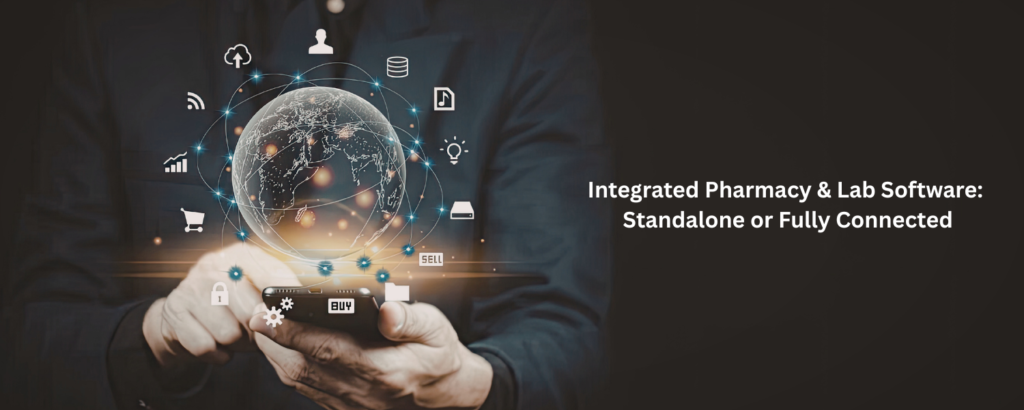
In modern healthcare environments, pharmacies and laboratories play a critical role in diagnosis, treatment, and patient outcomes. Hospitals and clinics often face a key decision: use standalone pharmacy and lab software or adopt a fully connected, integrated system within their Hospital Management Software (HMS).
Understanding the difference can help healthcare providers improve efficiency, reduce errors, and deliver better patient care.
What Is Standalone Pharmacy & Lab Software?
Standalone systems operate independently. Pharmacy and lab modules function as separate applications, often requiring manual data entry or file-based data sharing.
Key Characteristics of Standalone Systems
Separate login and databases
Manual transfer of prescriptions and lab requests
Limited real-time visibility
Lower initial setup complexity
Standalone software may suit very small clinics or facilities with low patient volumes.
What Is Fully Connected Pharmacy & Lab Software?
A fully integrated pharmacy and lab system is connected directly with OPD, IPD, EMR, billing, and doctor modules within an HMS. Data flows automatically across departments in real time.
Key Characteristics of Integrated Systems
Single patient record across departments
Automatic prescription-to-pharmacy flow
Direct lab order generation from consultations
Unified billing and reporting
Standalone vs Integrated: Key Comparison
- Workflow Efficiency
Standalone systems require manual coordination between doctors, pharmacy staff, and lab technicians.
Integrated systems automate workflows, reducing delays and duplication.
Winner: Fully Connected System
- Error Reduction
Manual data entry in standalone systems increases the risk of prescription and report errors.
Integrated systems ensure accurate data transfer directly from doctor orders.
Winner: Fully Connected System
- Billing & Revenue Management
Standalone software often leads to fragmented billing and missed charges.
Integrated pharmacy and lab software automatically syncs charges to patient bills.
Winner: Fully Connected System
- Patient Experience
Patients may need to repeat information or wait longer for coordination in standalone setups.
Integrated systems enable faster service, quicker reports, and smoother patient journeys.
Winner: Fully Connected System
- Reporting & Analytics
Standalone systems provide limited, department-only reports.
Integrated systems offer consolidated reports across pharmacy, lab, doctors, and finance.
Winner: Fully Connected System
- Cost Considerations
Standalone systems may appear cheaper initially.
Integrated systems offer better long-term ROI by reducing manpower effort and revenue leakage.
Winner: Integrated System (long-term value)
When Does Standalone Software Make Sense?
Standalone pharmacy or lab software may be suitable if:
You run a very small clinic or diagnostic center
Operations are limited and simple
Budget constraints are high
No requirement for centralized patient records
Why Fully Integrated Software Is the Future
As healthcare becomes more data-driven and patient-centric, integration is no longer optional. Fully connected pharmacy and lab software ensures:
Faster clinical decisions
Accurate patient histories
Seamless coordination across departments
Better compliance and audit readiness
Hospitals using integrated systems are better equipped to scale, adapt, and maintain quality care.
Final Thoughts
While standalone pharmacy and lab software may serve short-term needs, fully integrated systems provide long-term efficiency, accuracy, and growth. For hospitals and clinics aiming to improve operational control and patient satisfaction, connected pharmacy and lab software is the smarter choice.