Managing a hospital involves much more than treating patients. From patient registration and appointments to billing, pharmacy, laboratory, medical records, staff coordination and management reporting, hundreds of activities take place every day. When these processes are handled manually or through disconnected systems, hospitals can face delays, duplication of work, errors and difficulty accessing important information.
A modern hospital management system can bring these activities together on a single platform and help hospitals improve operational efficiency.
What is a Hospital Management System?
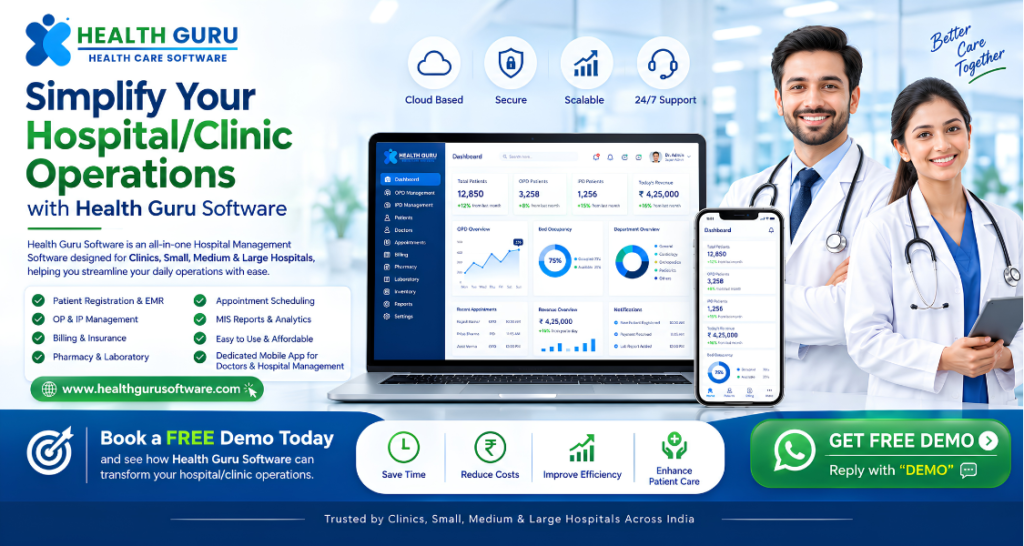
A hospital management system is software designed to manage and streamline the day-to-day operations of a hospital or healthcare facility. Depending on the hospital’s requirements, it can include modules for OPD, IPD, appointments, billing, pharmacy, laboratory, electronic medical records, doctors, patients, inventory and management reports.
Instead of maintaining information across registers, spreadsheets and separate applications, hospital staff can access relevant information through an integrated system.
Key Benefits of Hospital Management Software
1. Faster Patient Registration
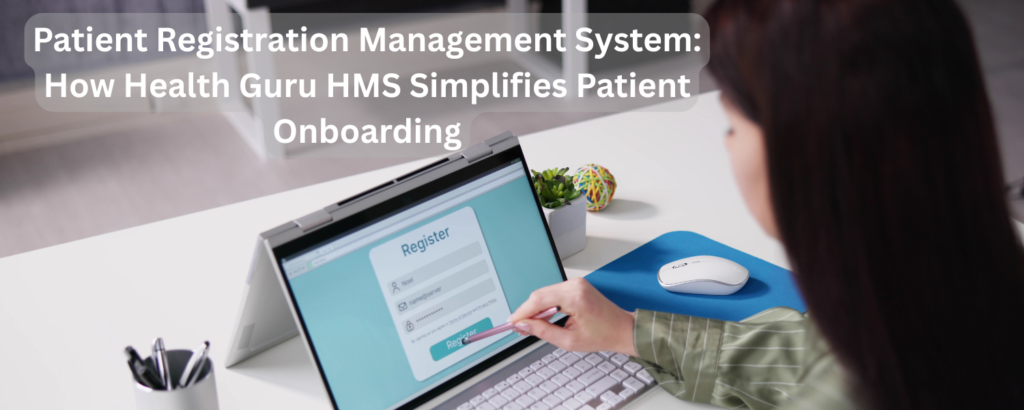
Patient information can be captured digitally and retrieved whenever the patient visits again. This reduces repetitive data entry and helps staff serve patients faster.
2. Better OPD and IPD Management
Doctors, reception staff and management can access appointment and admission information more efficiently. Bed and patient information can also be managed systematically.
3. Integrated Billing
A hospital management system can connect services, consultations, procedures, pharmacy and other charges with billing. This can reduce manual calculations and improve billing accuracy.
4. Digital Medical Records
Electronic patient records allow authorized users to access relevant medical information quickly. This can support better continuity of care and reduce dependence on paper files.
5. Pharmacy and Laboratory Integration
Pharmacy stock, billing and laboratory requests and reports can be managed as part of the overall hospital workflow instead of operating as completely separate processes.
6. Better Management Reporting
Hospital administrators need timely information to make decisions. MIS dashboards and reports can provide visibility into revenue, patient volumes, billing, pharmacy, laboratory and other operational activities.
Choosing the Right Hospital Software
Hospitals should not select software based only on the number of features. Ease of use, implementation support, scalability, data security, customization, integration capabilities and vendor support are equally important.
A good hospital management system should grow with the organization and support its operational requirements without making everyday processes unnecessarily complicated.
For hospitals looking to reduce manual work, improve information availability and create more connected operations, investing in the right hospital management software can be an important step toward digital transformation.
Connect with our experts to know more about Health Guru Hospital Management System.